
START HERE
Share a few details and we'll connect you with an enrollment coach to discuss your goals and next steps.
By submitting my information, I consent to being contacted by The University of Oklahoma and/or OU Education Services via SMS/text message, phone, email, and other electronic means, including through the use of an automatic telephone dialing system, AI-powered technologies, and artificial or pre-recorded voice, for purposes related to OU’s program portfolio; my contact information will not be shared with third-party affiliates. Message and data rates may apply. Opt-out of communications any time by replying STOP to SMS, asking to be removed during a call, or clicking the unsubscribe link in emails. For support, refer to the Privacy Policy and Terms of Service for more details.
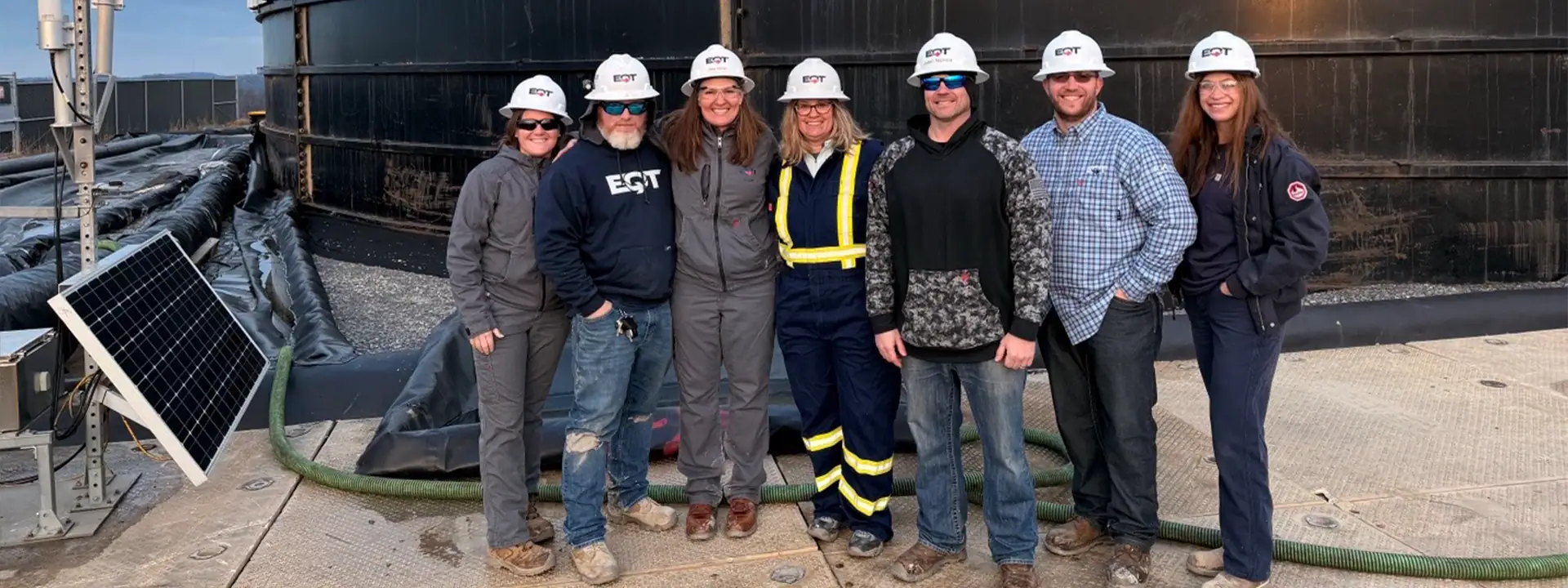
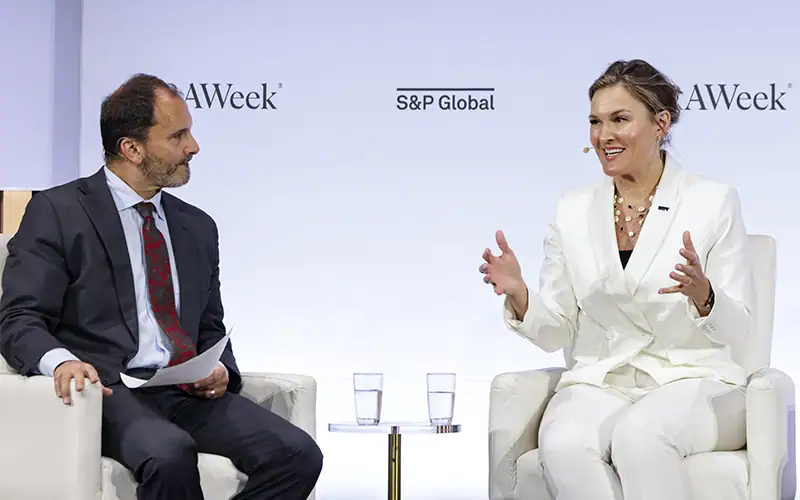
Breaking the Mold in Energy: Sarah Fenton Leading at Scale
From engineer to executive, Sarah Fenton reflects on how strategy, capital discipline, and OU’s Executive MBA in Energy shaped her leadership approach.
by Catherine Kerley
In today’s energy landscape, that level of leadership requires more than technical expertise. Commodity volatility, regulatory pressure, and evolving market dynamics demand leaders who can integrate engineering insight with financial discipline and organizational alignment.
Fenton built that capability deliberately.
“I knew I could solve technical problems,” she says. “But leading at the executive level means understanding how decisions impact the entire system, financially, operationally, and across the organization.”
That shift, from technical depth to enterprise leadership, is where the University of Oklahoma’s Executive MBA in Energy became a defining accelerator.
From Technical Depth to Enterprise Leadership
That foundation established her technical credibility. But as she advanced into leadership roles, the scope of decisions expanded into capital allocation, enterprise risk, and long-term strategy.
“I wanted to run an energy company one day,” she explains. “But when I started engaging with bankers and investors, it was clear that engineering economics and financial economics are not the same. My business acumen wasn’t where it needed to be. I also wanted to better understand the less tangible side of the business, organizational behavior and culture, and how those actually translate into performance and profitability. I needed to close that gap.”
The OU Executive MBA in Energy provided a direct and practical path to doing exactly that.
Designed for experienced professionals, the program connects business fundamentals to the realities of operating in a capital-intensive, highly dynamic industry. For Fenton, it became a way to expand her perspective beyond execution and into enterprise-level decision-making.
“This wasn’t about getting a grade,” she says. “It was about building capabilities I could apply immediately, understanding capital markets, governance, and how value is created at scale. It also gave me a framework for thinking about culture in a more structured way, how something that feels intangible can directly impact outcomes.”
A Program Built for Real-World Application
What distinguishes the OU EMBA in Energy is not just the curriculum; it is the context.The program brings together senior professionals from across the energy value chain, creating a peer-level environment where ideas are tested against real operating challenges.
“You’re learning alongside people who are making similar decisions in different parts of the industry,” Fenton says. “That forces you to challenge your assumptions and think more broadly.”
The hybrid structure enables that experience without stepping away from executive responsibilities. Online coursework provides flexibility, while in-person residencies create space for deeper, high-value engagement.
More importantly, the program integrates the disciplines leaders must navigate simultaneously, finance, governance, operations, and organizational behavior.
“At this level, decisions don’t happen in silos,” she says. “The program reflects how the business actually works.”
That integration becomes especially powerful when classroom frameworks intersect with real-world dynamics.
“I remember thinking corporate governance might not be that impactful,” she says. “At the time, EQT was in the midst of a hostile proxy campaign, which I observed from the sidelines. It was governance in action. That real-time context elevated the course, turning theory into practical, high-value discussion.”
The result is a learning experience grounded in application, where insights can be tested and refined against live operating conditions.
Turning Insight into Performance
At EQT, Fenton leads in an environment defined by scale, complexity, and the need for consistent execution.The EMBA didn’t just expand her perspective; it changed how she drives performance.
One of the most significant shifts was how she approached organizational effectiveness, not as a byproduct of leadership, but as a measurable driver of results.
“I learned there was a direct tie between engagement and profitability,” she explains. “Cost control is tangible. Culture isn’t, unless you make it measurable.”
Applying that mindset, she studied more structured approaches to understanding engagement and aligning teams with enterprise priorities.
The impact was not in isolated initiatives, but in compounding operational clarity, clearer expectations, faster feedback loops, and stronger alignment across teams.
“That alignment compounds,” she says. “And in this business, consistency at scale is what drives value.”
The program also strengthened her ability to evaluate decisions through multiple lenses, operational, financial, and organizational.
“You start asking better questions,” she notes. “Not just ‘Will this work?’ but ‘How does this impact capital efficiency, risk, and long-term value?’”
That integrated perspective is critical in an industry balancing near-term performance with long-term structural change.
A Strategic Advantage in a Changing Industry
Energy leaders today are navigating increasing complexity, balancing energy security, capital discipline, and evolving market expectations.Fenton sees the OU EMBA in Energy as uniquely positioned to prepare leaders for that reality.
“This program doesn’t just teach business fundamentals,” she says. “It teaches them in the context of energy, where capital intensity, risk, and timelines are fundamentally different.”
That specificity creates a meaningful advantage.
“You’re not learning something generic and then trying to apply it later,” she adds. “You’re learning it in the exact environment you’re operating in.”
Now serving on the program’s advisory board, Fenton continues to support its evolution, ensuring it remains aligned with the needs of today’s energy leaders.
Leading Forward
Fenton brings that systems-level view to decisions that shape both immediate performance and long-term enterprise value.
For engineers and technical professionals looking to expand their impact, her advice is clear:
“If you want to grow your influence, you have to expand your business acumen. That’s what allows you to operate at the next level.”
She sees the OU EMBA in Energy as a powerful accelerator for that transition.
“It builds on what you’re already good at and gives you the tools to lead more broadly, across strategy, finance, and the organization.”
And for those waiting until they feel ready:
“Don’t,” she says. “You’re never going to feel completely ready. The key is putting yourself in environments that force you to grow, and this program does exactly that.”

Vice Provost for Online Education
Evans Hall, Suite 104
660 Parrington Oval
Norman, OK 73019
Online Programs
Quick Links
OU Online