
Aerospace & Defense Leadership at a New Level
June 30, 2026 2026-06-30 10:45Aerospace & Defense Leadership at a New Level
How OU’s Hybrid Executive MBA in Aerospace and Defense develops leaders who operate across strategy, capital, and innovation.
- Molly Wirtz

After nearly a decade in the aerospace and defense industry, Tamer Elkhouly, Contracts Manager with Anduril Industries, found himself mired in middle management.
Primarily working in contracts for Raytheon, a premier defense contractor specializing in advanced missiles, sensors, radars, and integrated air defense systems, following a four-year stint as a Patriot Missile Fire Control Platoon Sergeant in the U.S. Army, he realized obtaining an executive leadership position required a deeper understanding of the industry than he possessed.
Elkhouly knew finding the right opportunity to get an executive-level education while continuing his career was imperative.
“This new defense ecosystem isn’t optional,” Elkhouly said. “Everyone will either need to adapt to the new speed or get left behind.”
Leadership challenges in the sector rarely fit neatly within a single discipline. Engineering decisions affect financial outcomes, contracts shape innovation timelines, and even organizational structure can influence mission success. AI, hypersonics, and autonomous systems are now core to how capability is built, deployed, and scaled.
Companies increasingly require leaders who understand the business of aerospace and defense, individuals with the ability to integrate systems, capital, and market dynamics and make decisions at speed.
While Elkhouly was on a path toward leadership, opportunities to gain the experience he needed to reach that goal weren’t going to come by just doing his job.
That’s when he found OU’s hybrid Executive MBA in Aerospace and Defense, offered through the AACSB-accredited Price College of Business.
“The program’s hybrid structure and executive focus in aerospace and defense was a differentiator,” he said. “I already had a decade of experience, so an EMBA was more appropriate to advance my career.”
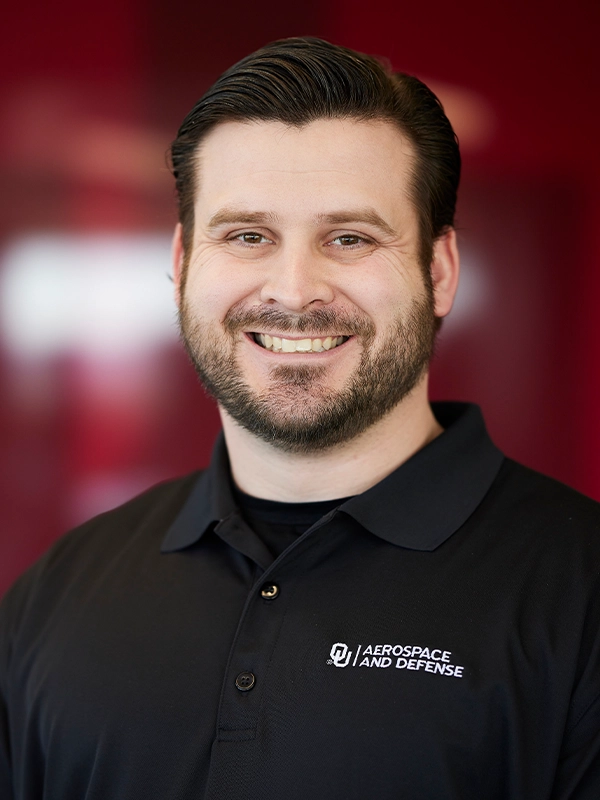
James Wulz, CEO of Oklahoma Space Factum, found himself in a similar situation. He had always wanted to build his career in space. After meeting someone who worked in Air Force Space Command, the precursor to the U.S. Space Force, that dream became a passion.
“They were a satellite operator,” he said, “and the way they talked about their job just sounded so cool. Knowing the opportunities and doors that would open for me in my life, that’s what really got me excited and interested in it.”
But 10 years into his career, he had hit a plateau. After working as a satellite operator for Raytheon as part of the U.S. Air Force Reserves, and a project engineer and manager at Northrup Grumman, he understood operations, planning, and cost management. Still, he wanted to have a greater impact on the burgeoning frontier of space business, one that moved beyond execution into strategic leadership.
He began researching his options. He needed something that would fill those knowledge gaps. Something that met his time criteria, workload criteria, and would be beneficial to his career.
Like Elkhouly, he found the answer in OU’s hybrid EMBA in Aerospace and Defense.
“I wanted something that I felt like I could really use and take information from. I wanted something that matched my level of leadership,” Wulz said. “The focus being aerospace and defense helped me feel like it was catered directly to what I was going to be working with rather than just being a generic MBA.”
The Importance of Executive-Level Education
The impact of OU’s program was immediate for both Elkhouly and Wulz. The degree reflected how modern defense organizations operate—cross-functional, fast-moving, and collaborative by necessity, and structured around short-cycle execution, live strategy challenges, and direct engagement with industry and government stakeholders, mirroring how decisions are made in aerospace and defense.
In-person residencies created space for meaningful networking and the kind of deep, dynamic discussions remote learning alone can’t match.
They were immersed in a culture where strategic access to military officers, engineers, executives, and entrepreneurs allowed them to test ideas without risk, refine strategies, and challenge assumptions. Feedback extended beyond faculty to an engaged alumni network of seasoned leaders across military, corporate, and government roles who actively integrated them into a tight-knit, high-trust community of industry leaders, spurring critical thinking, offering networking opportunities, and providing support in furthering their career goals.

Their interactions with CEOs, venture capitalists, and professionals from throughout the sector provided insight into how decisions are made on the other side of the table, how contracts are awarded, how investments are evaluated, and how innovation is funded.
“You might only see one side of the contracting process in your career,” Wulz said. “This program shows you how the other side operates, what they’re looking for, and how decisions get made.”
Connection That Drives Progress
In aerospace and defense, relationships are not just valuable, they’re essential.
The relationships Wulz formed during his EMBA coursework with CEOs, venture capitalists, and professionals from NASA helped him develop the foundation of Oklahoma Space Factum, a company he founded with several classmates, driven by the goal to create more opportunities for Oklahoma companies to enter the space industry.
“We recognized there was a huge gap in the market,” said Wulz. “Business people didn’t know how to get into my world very well. Oklahoma Space Factum was created to fill that gap, to actively partner with small businesses in the space sector to build capacity, win contracts, and shape the future of U.S. aerospace leadership.”
Elkhouly first turned the knowledge and connections he gained earning his EMBA into a management position within Raytheon before transitioning to an executive role with Anduril Industries, a non-traditional defense technology company specializing in advanced autonomous systems.
“They were looking for folks with a specific set of experience, including education,” he said. “I leveraged a lot of the lessons and insights to transition from a large corporation to a start up in defense. Right now, I’m putting together a brief on an effort to help commercialize parts of our business, and a lot of that will require an executive briefing to very senior decision makers. The research and presentation is critical. I had to do this in the program at OU, as well. I’m prepared for things like presenting to senior leadership.”
Executive Leadership Matters
As geopolitical tensions rise and technological advancements accelerate, the aerospace and defense sector is entering a new era defined by competition, complexity, and opportunity. The next generation of industry leaders will be defined by their ability to connect strategy, capital, and execution as the sector continues to commercialize.
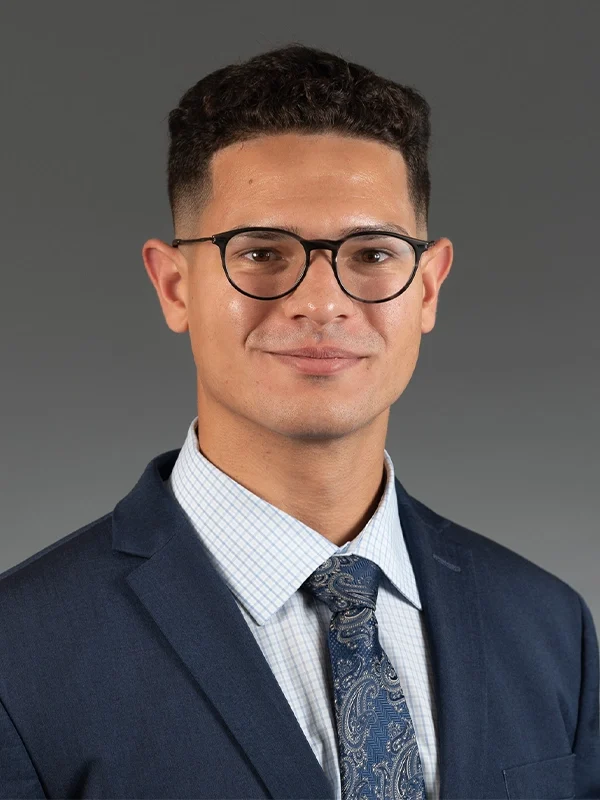
Elkhouly believes leadership in today’s aerospace and defense landscape demands the expertise to navigate constant uncertainty backed by proven skills in real-world application. Having the right education and a robust network of industry leaders, policymakers, and defense organizations builds the confidence needed to lead at the highest levels.
That confidence is critical because the future of the sector will not be led by those who wait for clarity, but those who act in its absence, like Wulz did.
“My EMBA experience helped me know where to look and opened my eyes to the gaps that were there,” he said. “There’s so much room for companies to carve out a niche, to create something, to innovate something. Governments are looking for innovation. They’re looking for new ways of doing things. They’re looking for something that some of these big companies can’t do or don’t want to do, and they’re giving small companies a shot at big contracts.”
The next generation of aerospace and defense leaders will be defined by their ability to connect strategy, capital, and execution, and act before certainty exists. OU’s hybrid Executive MBA in Aerospace and Defense gave Elkhouly and Wulz the tools to take their careers to new levels. For those ready to lead when the stakes are highest, the opportunity is clear.